Canicross, bikejoring and scootering: running safely with your dog
How to get started, build fitness and handle heat in harness sports, with what the research does and does not show.
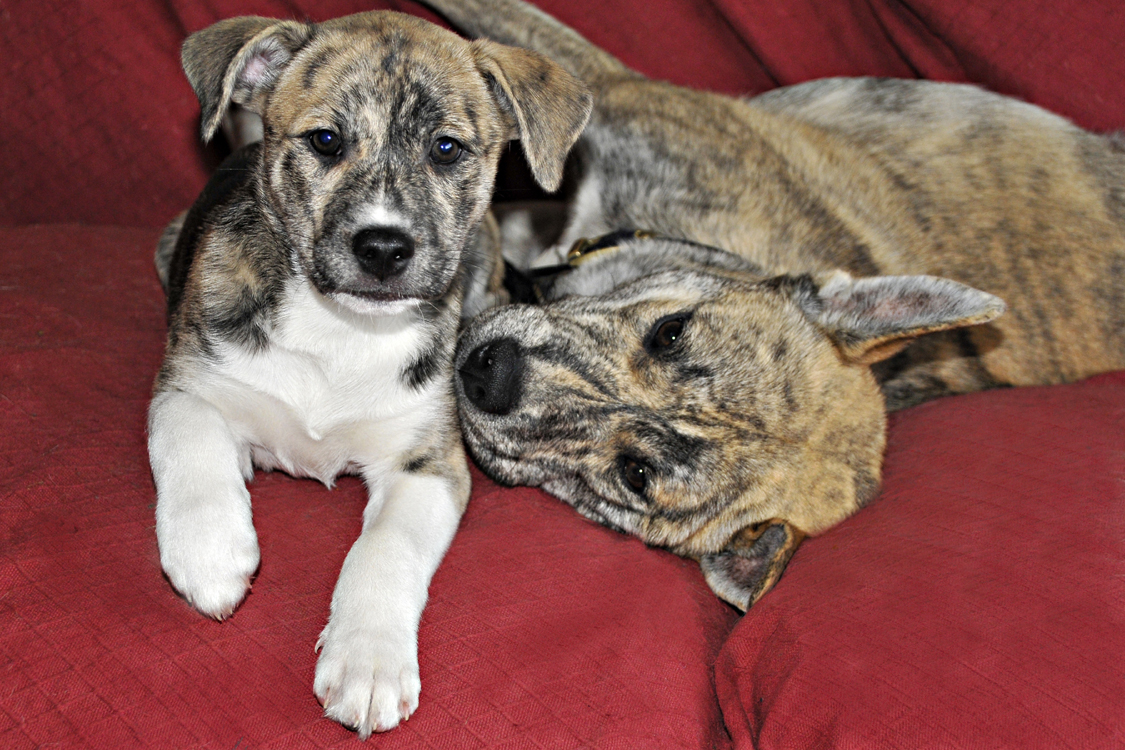
Canicross (running on foot with your dog in a harness), bikejoring (cycling with your dog pulling out front) and scootering (the same idea on a kick scooter) can be a brilliant outlet for an energetic dog. Many types of healthy adult dog take part, not just huskies. The main risks are well understood: heat, paw injuries and doing too much too soon. Most of the UK research comes from canicross events, so that is where the evidence in this guide is strongest.
We have a personal soft spot for this one: the site owner’s own two dogs bikejored from 2013 until they retired in 2020, and won many medals along the way.
The short version
- Exercise, not hot cars, is the most common cause of heatstroke in UK dogs. In UK vet records, 74.2% of heat-related illness cases were brought on by exercise. [1]
- Dogs can overheat even in winter. At UK canicross races held in conditions of −5 to 11 °C, some dogs finished above 40.6 °C at every race. [4]
- About a quarter of dogs kept heating up for the first few minutes after they stopped running. Cool first, then travel. [5]
- If your dog overheats, cool them on the spot with plenty of cool water, then get them to a vet. [5, 6, 8]
- Race rules say dogs must be at least 18 months old (12 months in the British recreational class). These are rules, not research findings: no study we found sets a safe age to start pulling. [14, 15]
- Paw cuts and grazes are the most common canicross injury. Check feet after every run. [10]
From our own trails
A few films from the site owner’s bikejoring days.
Is my dog suited to it?
Harness sports suit a lot of fit, healthy dogs who enjoy running. Some dogs need extra caution because they are at higher risk of heat-related illness, which is the biggest danger in these sports:
- Flat-faced (brachycephalic) dogs. They had higher odds of every type of heat-related illness in UK vet records, including the type brought on by exercise, and higher odds of dying from it. [1, 2, 3]
- Dogs carrying extra weight. Being heavier than average for the dog’s breed and sex was a risk factor, and so was weighing over 50 kg. [2] Our healthy weight guide explains how to check your dog’s shape at home.
- Older dogs. Dogs over two had higher odds of heat-related illness, and older dogs had higher odds of dying from it. [2, 3]
- Young male dogs. They had higher odds of heat-related illness brought on by exercise. [1]
Breed risk factors in the same study included the Chow Chow, Bulldog and French Bulldog. [2] None of this means these dogs can never run with you. It means the margin for error is smaller. Before starting any new high-intensity sport, it’s sensible to get your dog checked by your vet, especially if they are older, overweight or flat-faced, or have a heart, breathing or joint problem. That is general safety advice, not a finding from a particular study.
How old should my dog be?
This is the question everyone asks, and the honest answer is that the research doesn’t give one.
What the rules say. The International Federation of Sleddog Sports (IFSS) says dogs racing under its rules must be at least 18 months old. [14] The British Sleddog Sports Federation (BSSF) also sets 18 months, except in its recreational class, which is open to dogs from 12 months. [15] Other race organisers may set their own minimums, so check the rules for the event you’re entering.
What the research says. We found no study linking the age a dog starts harness sports to later joint problems, and no study that sets a safe age to start pulling. The closest evidence is a Norwegian study of 501 large-breed puppies. Using stairs from birth to three months was linked with more hip dysplasia, while off-lead exercise on soft, moderately rough ground over the same period was linked with less. [12] That study is about very young puppies, though, not about pulling in a harness. Dogs grow and mature at different rates depending on their size and breed, so talk to your vet about when your own dog is ready.
Building fitness gradually
- Start short and build up over weeks. Begin with short, easy runs and increase the distance gradually as your dog’s fitness grows. This is sensible practice rather than a tested training plan: we found no research comparing training programmes for these sports.
- Let your dog set the pace. Race rules for canicross and bikejoring strictly ban pulling a dog or forcing it to move forward, and a dog that becomes unfit or refuses to go on can’t finish the race. [14] The same principle makes sense in training. If your dog slows down or stops, that’s information, not stubbornness.
- Warm up and cool down. A few minutes of walking, then easy trotting, before you set off, and a walk afterwards. In a survey of 109 handlers of active working and sport dogs, few routinely warmed their dogs up or cooled them down, and 45.5% of the dogs had been injured at some point, mostly with mild muscle and joint injuries. [11] That was a small, self-selected sample, and we found no controlled studies showing that warm-ups prevent injury in dogs. We recommend them as sensible practice, not proven protection.
Heat: the big one
Most people think of hot cars when they think of dogs and heatstroke. In the UK, exercise is a much bigger cause. A study of vet records for 905,543 UK dogs found 1,259 heat-related illness events: 74.2% were triggered by exercise, 12.9% by hot weather and 5.2% by being shut in a vehicle. Heat-related illness brought on by exercise affected more dogs, and killed more dogs, than hot cars did. [1] Heat-related illness is uncommon, at an estimated 0.04% of UK dogs in 2016, but 14.18% of cases died. [2]
It doesn’t have to feel hot. On days when UK dogs were seen by a vet with heat-related illness, the median air temperature was only 16.9 °C. [3] A study of 108 dogs at 10 UK canicross race days, held in conditions from −5 to 11 °C, recorded post-race ear temperatures from 37.0 to 42.5 °C. At every race, some dogs finished above 40.6 °C, a temperature the authors say is likely to cause heatstroke if it stays that high. That happened in 10.7% of readings overall. Male dogs and dark-coated dogs were more likely to finish above 40.6 °C, faster running was weakly linked with higher temperatures, and the share of dogs overheating rose as conditions got warmer. [4]
The heating doesn’t stop when the running does. In a study of 52 dogs at UK canicross events, the dog’s temperature went up during the first 5 minutes after finishing in 24.4% of cases. Dogs that weren’t shut in a vehicle cooled down more. [5]
The race temperature rules
The IFSS publishes temperature guidelines for dryland races (races on land rather than snow). Temperature and humidity are measured in the shade, 50 cm above the ground: [14]
- Normal racing: below 18 °C for canicross, or below 16 °C for bikejoring, scootering and other classes, with humidity below 85%.
- From 16 °C to 18 °C: race distances must not go beyond the shortest set distances. For canicross, this cap applies up to 25 °C.
- From 18 °C to 22 °C (all classes except canicross): no more than 1.5 km, as a demonstration only.
- Above 22 °C: no team is harnessed, except in canicross.
- Once it reaches 18 °C, the race marshal must meet the race vet to decide whether to delay or cancel, and the vet’s opinion takes precedence.
These are expert guidelines, not tested safety limits. The 2018 race study found that no single weather measure predicted how hot a dog would be at the finish, and its authors called for more research on safe running conditions. [4] Its dogs overheated in conditions of −5 to 11 °C (measured as a “feels like” thermal comfort index), well below these thresholds. So treat the figures as an upper limit for your own runs, not as a sign that anything below them is safe.
Practical ways to reduce the risk
- Run early in the morning or late in the evening in warmer weather, and choose shaded routes.
- Carry water, and know where you could cool your dog in an emergency.
- Keep runs short and easy in mild but humid weather.
- Take extra care with dark-coated dogs and male dogs, which were more likely to overheat in the race study. [4]
- Watch your dog, not just the thermometer. Slowing down, dropping back or refusing to go on are reasons to stop.
Apart from the race study finding, these tips are general safety advice, not findings from particular studies.
If your dog overheats: cool first, then go to the vet
Signs to watch for include heavy panting, slowing down or refusing to go on, wobbliness and collapse. This list is general safety advice, not a finding from a particular study.
- Stop, and start cooling straight away, where you are, if it’s safe to do so. Published first aid guidelines recommend cooling on the spot before transport. They suggest running cool water over the body from the neck back, focusing on thinly furred areas such as the belly and soaking right through to the skin. [8]
- Cold-water immersion works. At UK canicross events, putting overheated dogs in cold water (0.1 to 15 °C) cooled them effectively, with no hypothermia or other side effects seen. [5] In a small trial in working dogs, partial water immersion cooled dogs more efficiently than applying isopropyl (rubbing) alcohol to their paw pads. [7]
- Don’t rely on wet towels alone. In UK vet records, only 21.7% of dogs with heat-related illness were cooled before they were taken to the vet. Wet towels were the most common method (51.3%), but they are not one of the two recommended methods: cold-water immersion, or wetting the dog and moving air over them. [6]
- Don’t put a hot dog straight into a closed car. Cool the vehicle before your dog gets in, and keep air moving around them on the journey. [5]
- Then take your dog to a vet promptly, even if they seem to recover. That is general safety advice, not a finding from a particular study.
- Don’t give medicines or home remedies. Leave treatment to your vet.
Vets grade heat-related illness as mild, moderate or severe. A revised UK grading tool published in 2026 treats a body temperature of 41.0 °C or above as critical. [9] It’s a tool for vets, not a way to diagnose your dog at home. If you think your dog has overheated, act on the signs.
Surfaces and paws
In an online survey of 160 canicross dogs, 21.9% had had at least one injury. Cuts, grazes and punctures were the most common, most often on the footpads of the front legs, and most injuries healed fully. Handlers got hurt too: 69 of the 147 who answered had been injured, most often in the ankle. [10] Dogs that ran alongside another dog, dogs that also did agility and purebred Labradors were more likely to have been injured. [10] The survey was self-selected and had no comparison group, so these are associations, not proof of cause.
- Choose softer trails where you can, and avoid sharp gravel and hot or rough surfaces.
- Check your dog’s paws after every run.
- On a bike or scooter, routes on or near roads add traffic and the risk of falls.
These tips are general safety advice, not findings from particular studies.
Kit basics
We don’t recommend products or brands. There’s no published research comparing harness designs or lines for injury, so this section describes what the kit does, based on the IFSS race rules. [14]
- A pulling harness, not a collar. The rules require the dog to wear a harness.
- A tugline with a shock-absorbing section. This joins the dog to you, your belt or your bike or scooter at all times.
- Canicross: the line attaches to a hip belt (or similar harness-style kit) at least 7 cm wide over your spine. The line should be 1.5 to 2.5 m long when stretched.
- Bikejoring and scootering: a working brake on each wheel and a helmet are compulsory in races. The line should be 2 to 3 m long when stretched, measured from the back of the dog to the front axle.
- No metal hook or ring at your end of the line. The rules ban these at the person’s end of the line in canicross and scootering, and in bikejoring when the line is attached to the rider.
Bikejoring is demanding work. A small study of 22 trained Greyster dogs (German Shorthaired Pointer and Greyhound crosses) describes it as high-intensity aerobic exercise with speed peaks close to 42 km/h. The heart and blood pressure changes it recorded after exercise were read by the authors as a normal training response, not heart disease. [13] It was a small study of one type of dog, so it is useful context rather than a guide for every dog.
When to see a vet
- Any time you think your dog has overheated, even if they seem to recover.
- Lameness that lasts more than a day or two, or keeps coming back.
- A paw pad injury that is deep or bleeding.
- Reluctance to run that isn’t normal for your dog.
- Coughing, collapse or changes in their breathing.
- Before you start, if your dog is older, overweight or flat-faced, or has a known health condition.
If your dog collapses or is struggling to breathe, contact a vet immediately. This list is general safety advice, not a finding from a particular study. For more everyday health topics, see our Health & Care guides.
What the research can’t tell us yet
- A safe age to start. The 12- and 18-month minimums are rules set by sport bodies, not findings from studies. We found no study linking the age a dog starts pulling to later joint problems.
- Bikejoring and scootering injuries. Most UK research comes from canicross. We found no published injury study of dogs, or riders, in bikejoring or scootering.
- Safe temperatures. The race temperature guidelines haven’t been tested in studies, and no single weather measure predicted how hot dogs got. [4]
- Warm-ups. There’s no controlled evidence in dogs that warm-ups and cool-downs prevent injury.
- Kit. No published study compares harness or line designs for injury risk.
Several studies here are surveys of volunteers or small samples, and some of the first aid advice is graded as expert opinion. [8] We read the abstracts of the research papers, the full text of the first aid guidelines and the IFSS and BSSF rule books. Race rules can change, so check the current rules for any event you enter.
General information only, not a substitute for veterinary advice. This guide cannot assess your dog or tell you whether they are fit to run. Your vet can. It deliberately does not name products, brands, medicines or doses.
Sources
- Hall EJ, Carter AJ, O’Neill DG (2020). Dogs don’t die just in hot cars: exertional heat-related illness (heatstroke) is a greater threat to UK dogs. Animals 10(8):1324. doi:10.3390/ani10081324. Study of UK primary-care veterinary records (VetCompass).
- Hall EJ, Carter AJ, O’Neill DG (2020). Incidence and risk factors for heat-related illness (heatstroke) in UK dogs under primary veterinary care in 2016. Scientific Reports 10:9128. doi:10.1038/s41598-020-66015-8. Study of UK primary-care veterinary records (VetCompass).
- Hall EJ, Carter AJ, Chico G, Bradbury J, Gentle LK, Barfield D, O’Neill DG (2022). Risk factors for severe and fatal heat-related illness in UK dogs: a VetCompass study. Veterinary Sciences 9(5):231. doi:10.3390/vetsci9050231. Study of UK primary-care veterinary records.
- Carter AJ, Hall EJ (2018). Investigating factors affecting the body temperature of dogs competing in cross country (canicross) races in the UK. Journal of Thermal Biology 72:33–38. doi:10.1016/j.jtherbio.2017.12.006. Field study at UK races.
- Carter AJ, Hall EJ, Bradbury J, Beard S, Gilbert S, Barfield D, O’Neill DG (2024). Post-exercise management of exertional hyperthermia in dogs participating in dog sport (canicross) events in the UK. Journal of Thermal Biology 121:103827. doi:10.1016/j.jtherbio.2024.103827. Field study at UK events.
- Hall EJ, Carter AJ, Bradbury J, Beard S, Gilbert S, Barfield D, O’Neill DG (2023). Cooling methods used to manage heat-related illness in dogs presented to primary care veterinary practices during 2016–2018 in the UK. Veterinary Sciences 10(7):465. doi:10.3390/vetsci10070465. Study of UK primary-care veterinary records.
- Parnes SC, Mallikarjun A, Ramos MT, Stone TA, Otto CM (2023). A randomized cross-over study comparing cooling methods for exercise-induced hyperthermia in working dogs in training. Animals 13(23):3673. doi:10.3390/ani13233673. Small randomised crossover trial (12 dogs).
- Mandell DC, Thawley VJ, Burkitt-Creedon JM, Fletcher DJ, Boller M, Fausak E (2026). RECOVER Guidelines: First Aid for Dogs and Cats. Clinical Guidelines. Journal of Veterinary Emergency and Critical Care 36(Suppl 1):S36–S62. doi:10.1111/vec.70138. Peer-reviewed consensus guidelines.
- Beard S, Hall EJ, Bradbury J, Carter AJ, Gilbert S, Leicester L, Barfield D, O’Neill DG (2026). Evaluation and validation of a revised VetCompass clinical grading tool for heat-related illness in dogs. Scientific Reports 16:4661. doi:10.1038/s41598-025-34768-9. Clinical grading tool for vets.
- Lafuente P, Whyle C (2018). A retrospective survey of injuries occurring in dogs and handlers participating in canicross. Veterinary and Comparative Orthopaedics and Traumatology 31(5):332–338. doi:10.1055/s-0038-1661390. Online survey (self-selected sample). Author order as listed by PubMed.
- Spinella G, Valentini S, Lopedote M (2023). Internet-based survey on physical activity and incidence of injury in active working dogs. Animals 13(10):1647. doi:10.3390/ani13101647. Online survey (self-selected sample).
- Krontveit RI, Nødtvedt A, Sævik BK, Ropstad E, Trangerud C (2012). Housing- and exercise-related risk factors associated with the development of hip dysplasia as determined by radiographic evaluation in a prospective cohort of Newfoundlands, Labrador Retrievers, Leonbergers, and Irish Wolfhounds in Norway. American Journal of Veterinary Research 73(6):838–846. doi:10.2460/ajvr.73.6.838. Prospective cohort study.
- Benito M, Boutigny L (2020). Cardiovascular clinical assessment in Greyster dogs in bikejöring training. Animals 10(9):1635. doi:10.3390/ani10091635. Small clinical study (22 dogs).
- International Federation of Sleddog Sports (IFSS). IFSS Race Rules 2024–2026 (Rev. 3), valid from 20 October 2025 until the 2026 General Assembly. Rules 3.5, 79.2, 79.3, 80.2, 80.3 and 81.2; Annex B.III (temperature guidelines for dryland races). Checked 16 November 2026. Official rules (not peer-reviewed).
- British Sleddog Sports Federation (BSSF). BSSF Race Rules, local rule 6 (minimum dog age). Checked 16 November 2026. Official rules (not peer-reviewed).
Evidence checked 16 November 2026. These sources inform the content; their authors have not reviewed or endorsed this article.