Why do dog breeds look so different?
The genetics of size, legs, coat, ears and skull shape: how a handful of genes turned one species into Chihuahuas and Wolfhounds, and what that means for health.
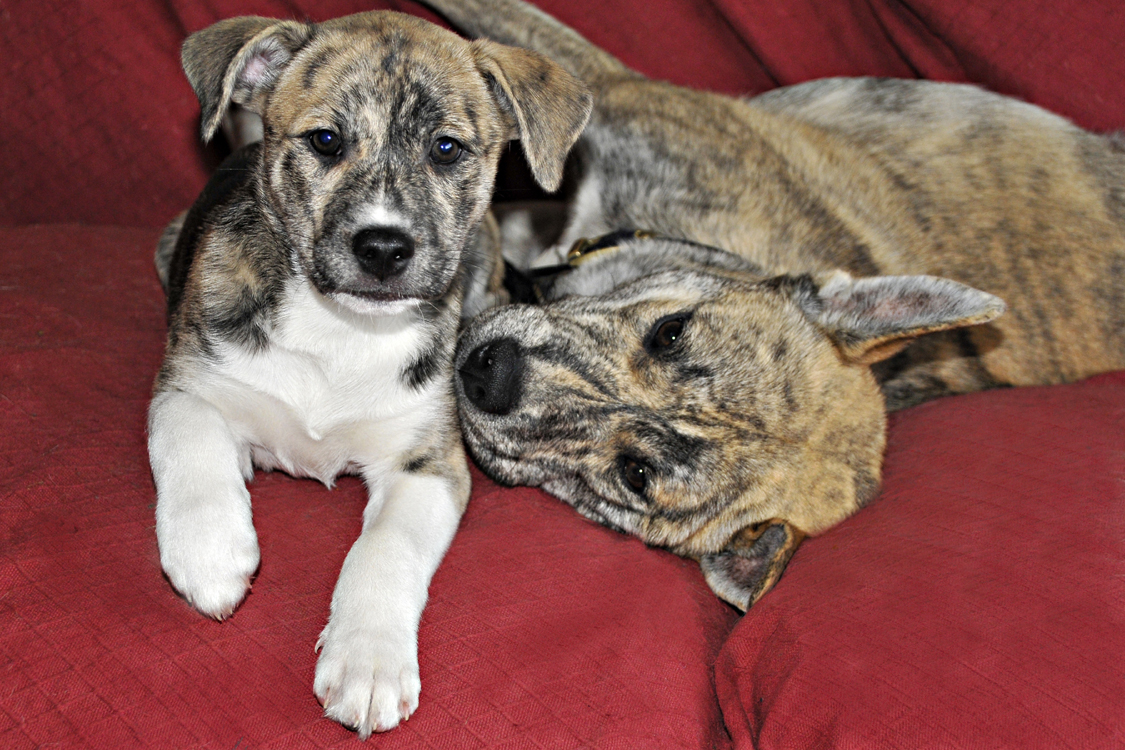
A Chihuahua and an Irish Wolfhound are the same species. So are a Dachshund, a Pug and a Poodle. Dogs have about a 40-fold difference in size between breeds, the biggest range of any mammal, [2] and on top of that come short legs, curly coats, floppy ears and flat faces. How did one species end up looking so different?
The surprising answer from the last 20 years of research is that a fairly small number of genes, each with a big effect, do much of the work. Some of those same genes also help explain why certain looks come with certain health problems. Here is what the science shows, and where it stops.
The short version
- A few genes do a lot. Across 80 breeds and 57 traits, three or fewer regions of the genome explained most of the variation for most traits. [14]
- Small dogs revived an ancient gene version. A variant linked to small size is older than dogs. It almost vanished in Ice Age wolves, then came back as people bred small dogs. [2]
- Short legs come from a copied gene, and one of those copies is strongly linked to disc disease. [5, 6]
- Three genes explain most coat types. [8]
- The shorter the muzzle, the higher the risk of breathing problems. [12]
Why dogs are a special case
Dogs have lived alongside people for thousands of years, but most modern breeds are less than 200 years old. [18] The biggest shifts in body size came from selection over the last two centuries, as breeders picked out extremes within closed breeding populations. [2]
That history left a distinctive mark. In a study that genotyped 915 dogs from 80 breeds, three or fewer regions of the genome explained most of the variation in most of the 57 traits measured, from body size to skull and leg shape. The authors noted that this is a contrast with similar studies in people and in crop plants. Many of the regions that differ most between breeds carry signs of recent selection, and they are linked to breed-defining traits such as body size, coat and floppy ears. [14]
Size: an old gene version, brought back
Research across more than 200 breeds has identified around 20 genes involved in body size. The one with the biggest effect is IGF1 (insulin-like growth factor 1), which accounts for roughly 15% of the size variation between breeds. [2] The first big study, in 2007, found a single version of the IGF1 region that was common to all the small breeds tested and nearly absent from giant breeds. [1]
The twist came in 2022. Researchers analysed 1,431 genomes from 13 species of wild and domestic canids, ancient and modern. They traced the effect to a single variant in a stretch of genetic code called IGF1-AS, which interacts with the IGF1 gene rather than being part of it. The older version, which predisposes to small size, was common in small breeds and in smaller wild canids. It nearly vanished in wolves during the Pleistocene (the Ice Age), before people breeding for small dogs brought it back. [2] In other words, breeders did not invent smallness. They revived an ancient variant.
IGF1 is not the whole story. Seven markers near six genes (IGF1, IGF1R, GHR, HMGA2, SMAD2 and STC2) explained 46% to 52.5% of the variation in body size between breeds, and 64.3% among breeds with a standard weight under 41 kg. In every case, the newer gene versions went with smaller size. But most breeds were not fixed at all of these markers: several combinations turned up within the same breed. [3] A later study of 722 canine genomes found more size variants which, combined with earlier findings, explained more than 90% of body size variation in dogs. [4]
Worth knowing: these percentages describe differences between breeds. They cannot predict how big an individual puppy will grow.
Short legs, and why they matter for backs
The short legs of the Dachshund, Corgi and Basset Hound have an unusual origin. At some point, a copy of a growth gene called FGF4 was “copied and pasted” into a new place in the dog genome. Most pasted copies like this (called retrogenes) stop working, but this one is active. A 2009 study found it was strongly associated with chondrodysplasia, the short-legged build that defines at least 19 breeds. [5]
A second FGF4 copy, on chromosome 12, was found in 2017. It was linked both to shorter legs and to intervertebral disc disease (IVDD), where the discs between the vertebrae can bulge or burst and press on the spinal cord. Dogs with this copy had 51 times the odds of IVDD in that study. [6] A follow-up of 569 dogs that had disc surgery found that one copy was enough to raise the risk, and that dogs carrying it tended to need their first disc surgery at a younger age. In mixed-breed dogs, the odds of disc herniation were about 18 times higher, and within breeds where some dogs carry the copy and some do not, the risk of disc surgery was between 5.5 and 15.1 times higher. [7]
Raised risk, not a certainty
These are odds and relative risks from studies of dogs that already had disc problems or surgery. They show that the gene copy is strongly linked to disc disease. They do not mean every dog that carries it will develop IVDD, and they do not tell you any one dog’s chance. If you have a long, low breed, ask your vet about keeping its back healthy, and see our healthy weight guide. Our Breed Finder has breed-specific notes.
Coats: three genes, many looks
Wire, long, curly, or all three at once? A study of more than 1,000 dogs from 80 breeds found that variants in just three genes account for most coat types in US purebred dogs. [8]
- RSPO2 gives “furnishings”: the moustache and eyebrows of wire-haired dogs.
- FGF5 is the main gene for long hair.
- KRT71 gives curl.
Short-haired breeds carry the original form of all three genes. Mixing and matching the three produces at least seven coat types, and together they explained the coat of 95% of the dogs tested, drawn from 108 breeds. [8]
One coat feature comes with a known health risk. The ridge of backward-growing hair along a Rhodesian Ridgeback’s back is caused by a duplicated stretch of DNA covering four genes. The same mutation predisposes dogs to dermoid sinus, a defect present from birth. [9]
Ears: floppy ears and size travel together
In the 80-breed study, most of the genome regions that differ most between breeds were linked to breed-defining traits, and floppy ears were one of them. [14] A region on chromosome 10, one of the most different between breeds, links ear shape and size. Variants linked to drop ears sit near a gene called MSRB3, and they are closely linked to variants in HMGA2 that go with body size. Because they are inherited together, selecting for one trait can carry the other along. The region also shows signs of selection during domestication itself. [13]
Faces: short muzzles and breathing
Skull shape is also controlled by a few genes of large effect. At least five regions of the genome shape the dog skull, one of them in a gene called BMP3. [10] A study led from the University of Edinburgh measured the skulls of 374 pedigree and mixed-breed dogs. It found a piece of mobile DNA inside a gene called SMOC2 that disrupts the gene and is associated with a shorter face. The more copies a dog had, the bigger the effect, and this one region accounted for 36% of the variation in face length in the dogs tested. The same study found that the FGF4 copy behind short legs also reduces the size of the braincase. [11]
Face shape matters for health. A Royal Veterinary College study of 700 dogs, confirmed in a second group of 154 flat-faced dogs, found that the risk of brachycephalic obstructive airway syndrome (BOAS) rises sharply as the muzzle gets shorter compared with the skull. BOAS was only seen in dogs whose muzzle was less than half the length of their cranium. Thicker necks and obesity added to the risk. [12] Flat-faced dogs also need extra care in the heat: see our guide to dogs in hot weather.
Tails: the screw tail
Bulldogs, French Bulldogs and Boston Terriers share a short, kinked “screw” tail. A study of 100 dogs from 21 breeds linked it to a change in a gene called DVL2. Every Bulldog and French Bulldog tested carried it, and 94% of the gene copies in Boston Terriers were this version. The variant was associated with malformed vertebrae in the spine and tail, and the authors compared it with Robinow syndrome, a rare condition in people. [15]
At a glance
| Trait | Genes highlighted in this guide | Health link found in the research |
|---|---|---|
| Size | IGF1 (and its partner IGF1-AS), IGF1R, GHR, HMGA2, SMAD2, STC2 | Larger, more inbred breeds needed more vet care in one insurance study [16] |
| Short legs | Extra copies of FGF4 (retrogenes) | The chromosome-12 copy is strongly linked to disc disease [6, 7] |
| Coat | RSPO2 (wire and furnishings), FGF5 (long), KRT71 (curly) | The Ridgeback’s ridge mutation also predisposes to dermoid sinus [9] |
| Ears | Near MSRB3, linked to HMGA2 for body size | None identified in these studies |
| Face and skull | BMP3, SMOC2 and other regions | Shorter muzzles go with higher risk of breathing problems (BOAS) [12] |
| Tail | DVL2 (screw tail) | Linked to malformed vertebrae in the spine [15] |
Breeds are not all the same inside
It is tempting to think every dog of a breed carries the same genes. The research says otherwise. Commercial DNA-test data from 11,790 dogs of 212 breeds found that, in 26 of the 30 breeds checked, populations of the same breed (for example from different countries, or working and show lines) differed significantly at one or more of the genes tested. In 143 breeds, some dogs carried gene versions that could produce traits outside the breed description. [17]
Looks, inbreeding and health are also connected. A study of 227 breeds, using DNA-based measures of inbreeding and insurance records, found that larger and more inbred breeds needed more health care. Health care needs also differed between flat-faced and other breeds, smaller, less inbred breeds were the healthiest, and the authors concluded that harmful body shapes added to the care dogs needed. [16] That is an association across breeds: it does not show that size or inbreeding alone causes any one dog’s problems.
What this means for you
- Looks and health are linked for some traits. The clearest examples are short legs and disc disease, and short muzzles and breathing problems. [6, 12]
- Breed is a starting point, not a verdict. Gene versions vary within breeds, and between-breed figures cannot predict an individual dog. [3, 17]
- Choosing a puppy? In the RVC study, BOAS was only seen in dogs whose muzzle was less than half their cranium length, so a longer muzzle means lower risk. [12] Our Breed Finder sets out what UK research says about each breed.
- Already have a long, low or flat-faced dog? Keeping them a healthy weight helps: obesity added to the risk of BOAS in the RVC study. [12] Talk to your vet about any breed-specific concerns.
What the research can’t tell us yet
- UK figures. Much of the gene-mapping work used dogs from the USA, and gene versions can differ between countries even within a breed. [17]
- Your dog’s own risk. The size percentages compare breeds, and the disc-disease figures are odds from case studies, not an individual dog’s chance. [3, 6, 7]
- Interests. The university behind the chromosome-12 FGF4 work declared patents on testing for it, and two of the studies include authors from a company that sells dog DNA tests. The findings are peer-reviewed, but we don’t recommend any test or product. [6, 7, 16, 17]
We read the abstracts of all the papers, and the full text of the coat study. [8]
Frequently asked questions
Why are dogs so different in size?
Dogs have about a 40-fold size range between breeds, more than any other mammal. Researchers have found around 20 genes involved in breed size, and a handful of them explain much of the difference between breeds. The biggest single effect comes from a variant near the IGF1 gene that is common in small breeds.
Why do Dachshunds and Corgis have short legs?
Their short-legged build is strongly associated with an extra, active copy of a growth gene called FGF4 that was copied and pasted into a new place in the genome. A second copy, on chromosome 12, has also been strongly linked to intervertebral disc disease.
Are flat-faced dogs more likely to have breathing problems?
Yes. A Royal Veterinary College study found that the risk of brachycephalic obstructive airway syndrome (BOAS) rises sharply as the muzzle gets shorter compared with the skull. In that study, BOAS was only seen in dogs whose muzzle was less than half the length of their cranium. Thicker necks and obesity added to the risk.
Does my dog’s breed decide its health?
No. Breed shape is linked to some health risks, but these figures describe groups of dogs, not your individual dog. Dogs within the same breed can carry different gene versions, and weight, lifestyle and care all matter. Your vet is the right person to talk to about your own dog.
General information only, not a substitute for veterinary advice. This guide cannot assess your own dog’s health or genetics. Speak to your vet about any concerns.
Sources
Numbers in square brackets refer to these peer-reviewed papers.
- Sutter NB, Bustamante CD, Chase K, Gray MM, Zhao K, Zhu L, et al., Ostrander EA (2007). A single IGF1 allele is a major determinant of small size in dogs. Science 316(5821):112–115. doi:10.1126/science.1137045. (An erratum was published in Science 316(5829):1284.)
- Plassais J, vonHoldt BM, Parker HG, Carmagnini A, Dubos N, Papa I, et al., Ostrander EA (2022). Natural and human-driven selection of a single non-coding body size variant in ancient and modern canids. Current Biology 32(4):889–897.e9. doi:10.1016/j.cub.2021.12.036. Analysis of 1,431 genomes from 13 canid species.
- Rimbault M, Beale HC, Schoenebeck JJ, Hoopes BC, Allen JJ, Kilroy-Glynn P, Wayne RK, Sutter NB, Ostrander EA (2013). Derived variants at six genes explain nearly half of size reduction in dog breeds. Genome Research 23(12):1985–1995. doi:10.1101/gr.157339.113.
- Plassais J, Kim J, Davis BW, Karyadi DM, Hogan AN, Harris AC, Decker B, Parker HG, Ostrander EA (2019). Whole genome sequencing of canids reveals genomic regions under selection and variants influencing morphology. Nature Communications 10:1489. doi:10.1038/s41467-019-09373-w. 722 canine genomes.
- Parker HG, VonHoldt BM, Quignon P, Margulies EH, Shao S, Mosher DS, et al., Ostrander EA (2009). An expressed fgf4 retrogene is associated with breed-defining chondrodysplasia in domestic dogs. Science 325(5943):995–998. doi:10.1126/science.1173275.
- Brown EA, Dickinson PJ, Mansour T, Sturges BK, Aguilar M, Young AE, et al., Bannasch DL (2017). FGF4 retrogene on CFA12 is responsible for chondrodystrophy and intervertebral disc disease in dogs. Proceedings of the National Academy of Sciences 114(43):11476–11481. doi:10.1073/pnas.1709082114. The authors’ university declared a provisional patent.
- Batcher K, Dickinson P, Giuffrida M, Sturges B, Vernau K, Knipe M, et al., Bannasch D (2019). Phenotypic effects of FGF4 retrogenes on intervertebral disc disease in dogs. Genes 10(6):435. doi:10.3390/genes10060435. 569 dogs that had disc surgery; a patent application was declared.
- Cadieu E, Neff MW, Quignon P, Walsh K, Chase K, Parker HG, et al., Ostrander EA (2009). Coat variation in the domestic dog is governed by variants in three genes. Science 326(5949):150–153. doi:10.1126/science.1177808.
- Salmon Hillbertz NHC, Isaksson M, Karlsson EK, Hellmén E, Pielberg GR, Savolainen P, et al., Andersson G (2007). Duplication of FGF3, FGF4, FGF19 and ORAOV1 causes hair ridge and predisposition to dermoid sinus in Ridgeback dogs. Nature Genetics 39(11):1318–1320. doi:10.1038/ng.2007.4.
- Schoenebeck JJ, Hutchinson SA, Byers A, Beale HC, Carrington B, Faden DL, et al., Ostrander EA (2012). Variation of BMP3 contributes to dog breed skull diversity. PLoS Genetics 8(8):e1002849. doi:10.1371/journal.pgen.1002849.
- Marchant TW, Johnson EJ, McTeir L, Johnson CI, Gow A, Liuti T, et al., Schoenebeck JJ (2017). Canine brachycephaly is associated with a retrotransposon-mediated missplicing of SMOC2. Current Biology 27(11):1573–1584.e6. doi:10.1016/j.cub.2017.04.057. Led from the Royal (Dick) School of Veterinary Studies and Roslin Institute, University of Edinburgh; 374 dogs.
- Packer RMA, Hendricks A, Tivers MS, Burn CC (2015). Impact of facial conformation on canine health: brachycephalic obstructive airway syndrome. PLoS ONE 10(10):e0137496. doi:10.1371/journal.pone.0137496. Royal Veterinary College; 700 dogs plus a confirmatory group of 154.
- Webster MT, Kamgari N, Perloski M, Hoeppner MP, Axelsson E, Hedhammar Å, Pielberg G, Lindblad-Toh K (2015). Linked genetic variants on chromosome 10 control ear morphology and body mass among dog breeds. BMC Genomics 16:474. doi:10.1186/s12864-015-1702-2.
- Boyko AR, Quignon P, Li L, Schoenebeck JJ, Degenhardt JD, Lohmueller KE, et al., Ostrander EA (2010). A simple genetic architecture underlies morphological variation in dogs. PLoS Biology 8(8):e1000451. doi:10.1371/journal.pbio.1000451. 915 dogs from 80 breeds.
- Mansour TA, Lucot K, Konopelski SE, Dickinson PJ, Sturges BK, Vernau KL, et al., Bannasch DL (2018). Whole genome variant association across 100 dogs identifies a frame shift mutation in DISHEVELLED 2 which contributes to Robinow-like syndrome in Bulldogs and related screw tail dog breeds. PLoS Genetics 14(12):e1007850. doi:10.1371/journal.pgen.1007850.
- Bannasch D, Famula T, Donner J, Anderson H, Honkanen L, Batcher K, Safra N, Thomasy S, Rebhun R (2021). The effect of inbreeding, body size and morphology on health in dog breeds. Canine Medicine and Genetics 8:12. doi:10.1186/s40575-021-00111-4. Three authors work for a company that sells dog DNA tests.
- Dreger DL, Hooser BN, Hughes AM, Ganesan B, Donner J, Anderson H, Holtvoigt L, Ekenstedt KJ (2019). True colors: commercially-acquired morphological genotypes reveal hidden allele variation among dog breeds, informing both trait ancestry and breed potential. PLOS ONE 14(10):e0223995. doi:10.1371/journal.pone.0223995. Uses data from a commercial DNA test; some authors work for the company.
- Schoenebeck JJ, Ostrander EA (2014). Insights into morphology and disease from the dog genome project. Annual Review of Cell and Developmental Biology 30:535–560. doi:10.1146/annurev-cellbio-100913-012927. Narrative review.
Evidence checked 24 November 2026: citation details checked against Crossref and PubMed, and figures checked against the papers’ abstracts (and, for the coat study, its full text). These sources inform the content; their authors have not reviewed or endorsed this guide.
Spotted something? If anything here needs correcting, or you have a question, get in touch through our contact page.