Balto, Togo and the race to Nome: the true story
In 1925, dog teams carried medicine 674 miles across frozen Alaska. Here is what really happened, and what science has learned since.
In January 1925, Nome was running out of time. The small gold-rush town sits on the Bering Sea coast of Alaska, and in winter its port froze solid. No ship could get in. Diphtheria had broken out and children had already died. The town’s only doctor, Curtis Welch, had found that his stock of antitoxin had expired, and the new supply he had ordered had not arrived before the ice closed the port. [3]
Antitoxin was found in Anchorage and sent north by train to Nenana, the closest station to Nome. From there it still had 674 miles of frozen trail to cover, and the open-cockpit planes of the day were not safe in that weather. The only way to get it to Nome was by dog sled. [1, 11]

The relay in numbers
What followed became known as the Serum Run, or the Great Race of Mercy. About 20 mushers and more than 150 dogs passed the package from team to team, through blizzards, gale-force winds and temperatures far below freezing. The antitoxin reached Nome in a record 127.5 hours, about five and a half days, and the Alaska State Archives note that not a single vial was broken. [1, 2]
- 674 miles from Nenana to Nome.
- About 20 mushers and more than 150 dogs.
- 127.5 hours from start to finish.
Togo and Balto: who really saved Nome?
If you know one name from the Serum Run, it is probably Balto. But the hardest work fell to another dog. Togo was the lead dog of Leonhard Seppala, a Norwegian-born musher famous for his fast Siberian racing teams. According to the US National Park Service, Togo led his team for more than 261 miles of the relay, the longest and most dangerous stretch of the route. He was 12 years old. [3]
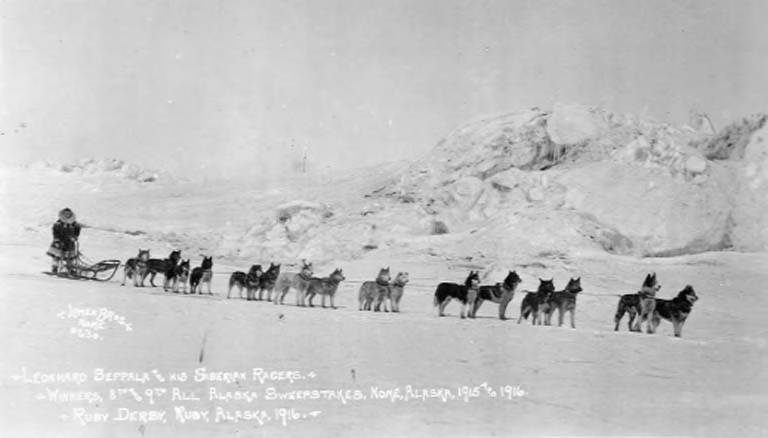

Togo had not looked like a champion. The Park Service describes him as a mischievous puppy who was given away, then escaped through a window to get back to Seppala’s teams. Seppala later said he never had a better dog. [3]
Balto ran the final leg. Leading Gunnar Kaasen’s 13-dog team, he covered the last 53 miles into Nome, according to the Cleveland Museum of Natural History. The Park Service gives the figure as 55 miles, so “about 55 miles” is the fair way to put it. Balto was born in Seppala’s kennel in 1919, and Seppala thought of him as a stout, strong freight dog rather than a racer. [2, 3]
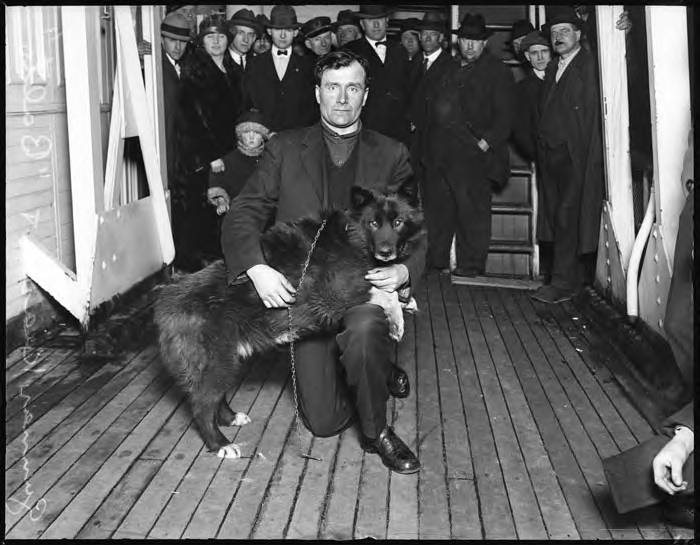
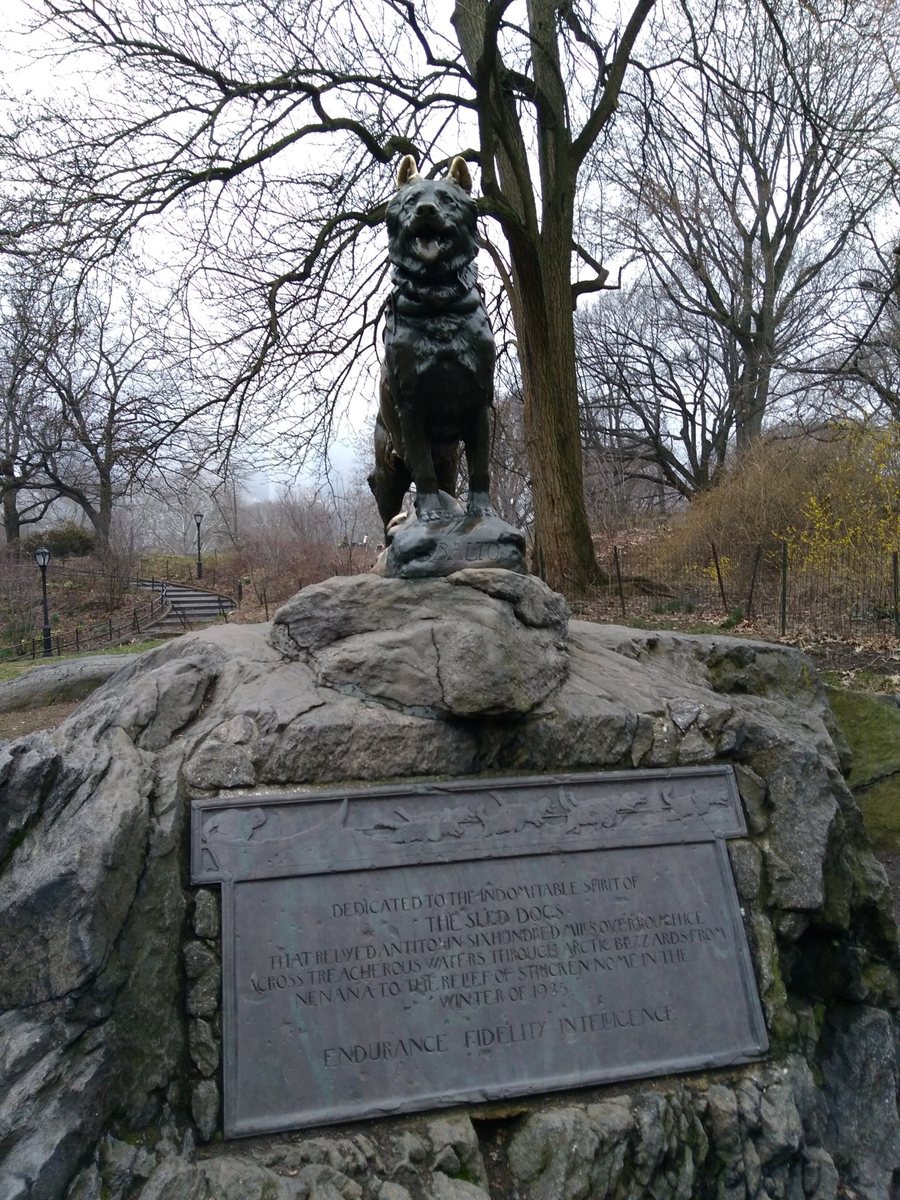
Because Balto’s team carried the antitoxin into Nome, the newspapers and radio made him the star. Ten months later he was in New York for the unveiling of his own statue in Central Park. [11] The National Park Service now puts it plainly: Balto often gets the credit, but Togo led his team across the most dangerous leg of the journey. [3]
After the headlines
Fame did not guarantee a happy ending. Balto and his teammates toured the US vaudeville circuit with Kaasen for two years. They were then sold and ended up on show in a “dime museum” in Los Angeles, ill and badly treated. [2]
A Cleveland businessman, George Kimble, saw them there and was outraged. He had two weeks to raise $1,500 to buy them. Cleveland raised the money in 10 days, with gifts from schoolchildren, factory workers, hotels, shops and the local kennel club. On 19 March 1927, Balto and six teammates, Fox, Billy, Tillie, Sye, Old Moctoc and Alaska Slim, arrived to a hero’s welcome and a parade through the city’s Public Square. They lived out their lives at Cleveland’s Brookside Zoo. [2]
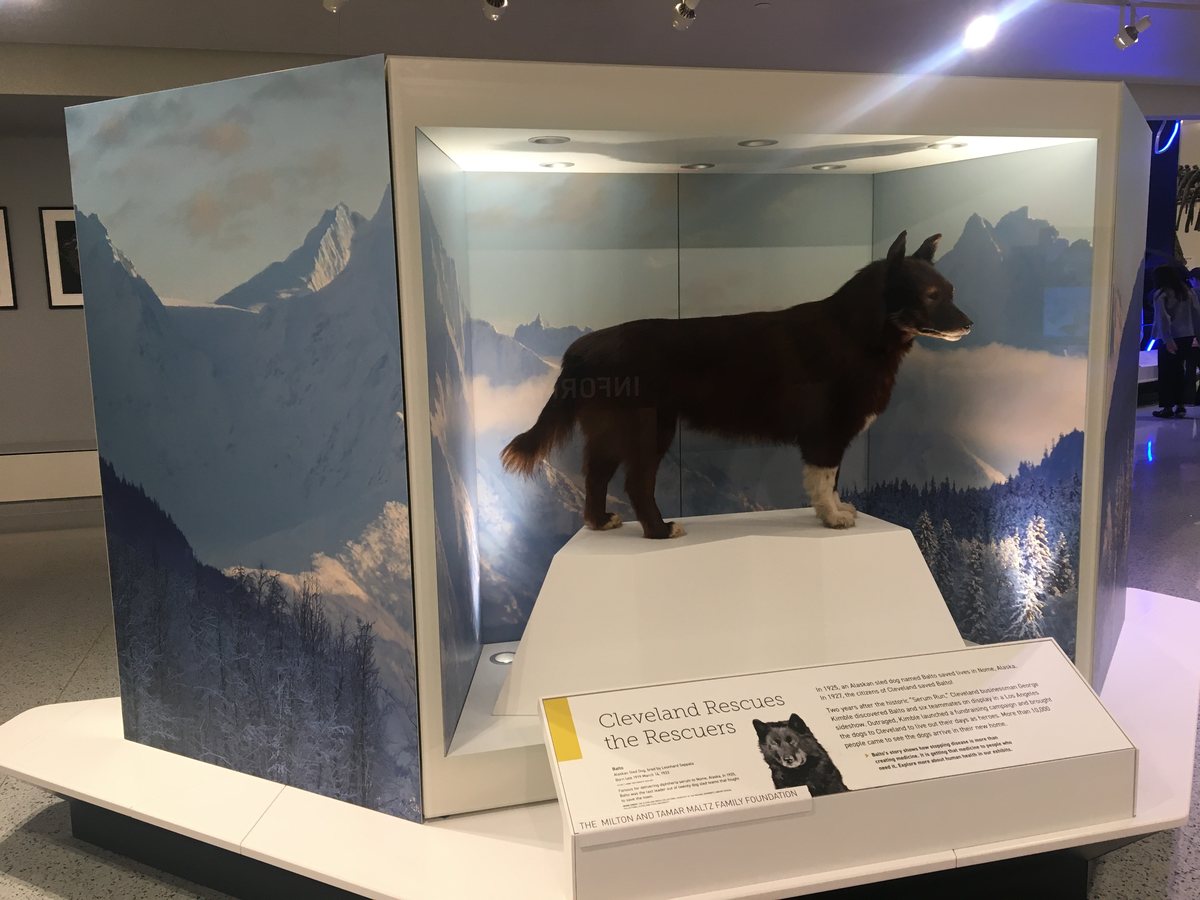
Balto died in 1933, and his mount went on display at the Cleveland Museum of Natural History, where he still is. Togo retired to Poland Spring in Maine, where he was put to sleep at the age of 16. His mounted skin is now at the Iditarod Trail Sled Dog Race headquarters in Wasilla, Alaska, after a campaign by Alaskan schoolchildren to bring him home. [2, 3]

What Balto’s DNA revealed
Almost a century later, Balto had one more job to do. In 2023, scientists sequenced his genome from a small sample of skin taken from his mount, and published the results in Science. [4, 5]
- He was only partly Siberian Husky. Balto shared just part of his ancestry with the modern breed. He also had ancestry related to Alaskan sled dogs, Greenland dogs, village dogs and Tibetan Mastiffs. [4, 5]
- He came from a healthier population. Balto’s working sled dog population was more genetically diverse and less inbred than modern breeds, with fewer rare, potentially harmful gene variants. [4, 5]
- His DNA suggests what he looked like. The genome predicts he stood about 55 cm at the shoulder and had a double coat that was mostly black with a little white. [5]
- He had working-dog genes. The researchers found variants in genes linked to weight, coordination, joint formation and skin thickness, which fits a dog bred to run in the cold. [4]
As the researchers put it, Balto lived at a time when dogs were more varied than today’s breeds. His population was different both from modern Siberian Huskies, which have since been bred to a physical standard, and from modern Alaskan racing sled dogs. [4]
Sled dogs are an ancient line
Balto and Togo belonged to a very old tradition. A 2020 study compared the genome of a roughly 9,500-year-old dog from Zhokhov Island in the Siberian Arctic with those of 10 modern sled dogs. It found that Arctic sled dogs belong to a lineage at least 9,500 years old. [6]
Today’s Siberian Husky, briefly
Those famous ice-blue eyes have a genetic story too. A study of more than 6,000 dogs linked blue eyes in Siberian Huskies to a duplicated stretch of DNA on chromosome 18, near a gene called ALX4. Not every dog that carries it has blue eyes. [7]
In a large 2024 study of UK dogs, Siberian Huskies had a median lifespan of 11.9 years, against 12.5 years for all dogs. [8] Our guide to how long dogs live explains what figures like these mean. If the story has you thinking about a husky, see the Siberian Husky in our Breed Finder, and our hot weather guide for a thick-coated dog in a British summer.
Myths worth busting
- “Balto saved Nome on his own.” Balto ran the final leg of a relay of about 20 teams. Togo’s leg was the longest and most dangerous. [2, 3]
- “Balto was part wolf.” The Cleveland museum calls this a myth. His genome traced his ancestry to dog populations such as Alaskan sled dogs, Greenland dogs and village dogs. [2, 4]
- “Balto was a pure Siberian Husky.” Only part of his ancestry matches today’s breed. [4, 5]
- “The Iditarod was set up to commemorate the Serum Run.” It shares some of the same trail, but the race organisers say it is a separate event. Joe Redington Sr. started it in 1973 to get the Iditarod Trail recognised and to keep Alaska’s sled dogs in use as snowmobiles took over. A separate commemorative Serum Run relay exists. [9]
- Exact distances. Sources differ slightly, for example 53 or 55 miles for Balto’s leg, so we say “about” where they disagree.
Films and fame
The Serum Run has been retold on screen more than once. Fame can sell a breed: a study of US Kennel Club registrations found that a dog film was often followed by a rise in the featured breed’s popularity lasting up to 10 years. [10] Fame is not a good reason to choose a breed. If the story has you dreaming of a husky, look at what the breed needs day to day in our Breed Finder, and consider talking to a breed rescue.

Further reading
Ad: The product names below link to Amazon. If you buy through them, WoofWisdom earns a small commission at no extra cost to you. As an Amazon Associate I earn from qualifying purchases. We chose these ourselves, and no brand paid to be included.
- The Cruelest Miles Ad · Amazon (opens Amazon in a new tab) by Gay and Laney Salisbury: a detailed, gripping history of the 1925 serum run, for adult readers. (Some UK editions spell it The Cruellest Miles.)
- Togo Ad · Amazon (opens Amazon in a new tab) by Robert J. Blake: an illustrated picture book about Togo and Seppala, for younger readers.
- Balto and the Great Race Ad · Amazon (opens Amazon in a new tab) by Elizabeth Cody Kimmel: a short chapter book telling the story for children.
Sources
Peer-reviewed papers are marked as such. The other sources are official, museum and organisation pages.
- Alaska State Archives. Serum Run of 1925. https://archives.alaska.gov/education/serum.html
- Cleveland Museum of Natural History (27 April 2023). Museum Icon Balto Contributes to Science (press release). https://www.cmnh.org/news/press-room/2023/04/27/museum-icon-balto-contributes-to-science
- US National Park Service. Togo. https://www.nps.gov/people/togo.htm
- Stephens T. (27 April 2023). Genome of famed sled dog Balto reveals genetic adaptations of working dogs. UC Santa Cruz News. https://news.ucsc.edu/2023/04/balto-sled-dog-genome/
- Peer-reviewed: Moon KL, Huson HJ, Morrill K, et al. (2023). Comparative genomics of Balto, a famous historic dog, captures lost diversity of 1920s sled dogs. Science 380(6643): eabn5887. https://doi.org/10.1126/science.abn5887
- Peer-reviewed: Sinding M-HS, Gopalakrishnan S, Ramos-Madrigal J, et al. (2020). Arctic-adapted dogs emerged at the Pleistocene-Holocene transition. Science 368(6498): 1495-1499. https://doi.org/10.1126/science.aaz8599
- Peer-reviewed: Deane-Coe PE, Chu ET, Slavney A, Boyko AR, Sams AJ. (2018). Direct-to-consumer DNA testing of 6,000 dogs reveals 98.6-kb duplication associated with blue eyes and heterochromia in Siberian Huskies. PLOS Genetics 14(10): e1007648. https://doi.org/10.1371/journal.pgen.1007648
- Peer-reviewed: McMillan KM, Bielby J, Williams CL, et al. (2024). Longevity of companion dog breeds: those at risk from early death. Scientific Reports 14: 531. https://doi.org/10.1038/s41598-023-50458-w
- Iditarod Trail Committee. Misconceptions and More: Iditarod and the Serum Run; The History of the Iditarod Trail Sled Dog Race. https://iditarod.com/edu/misconceptions-and-more-iditarod-the-serum-run/
- Peer-reviewed: Ghirlanda S, Acerbi A, Herzog H. (2014). Dog movie stars and dog breed popularity: a case study in media influence on choice. PLoS ONE 9(9): e106565. https://doi.org/10.1371/journal.pone.0106565
- NYC Parks. Central Park Monuments: Balto. https://www.nycgovparks.org/parks/central-park/monuments/75
Image credits
- Gunnar Kaasen and Balto, Seattle, 21 March 1925: Seattle Post-Intelligencer staff photographer; Seattle Post-Intelligencer Collection, Museum of History & Industry (MOHAI 4619). Public domain in the US (published 1925, copyright expired). Source: https://commons.wikimedia.org/wiki/File:Gunnar_Kaasen_and_dog_Balto,_Seattle,_March_21,_1925_(MOHAI_4619).jpg
- Leonhard Seppala and his Siberian racers, 1916: Photo: Lomen Bros.; University of Washington Libraries, Special Collections (AL+CA 6486). Public domain in the US (published 1916, copyright expired). Source: https://commons.wikimedia.org/wiki/File:Leonhard_Seppala_and_his_winning_dogsled_team_during_9th_All-Alaska_Sweepstakes_dogsled_race,_Ruby,_Alaska,_1916_(AL%2BCA_6486).jpg
- Balto at the Cleveland Museum of Natural History, 2023: Photo: Nathan Obral (own work, 17 November 2023). CC0 1.0 (public domain dedication) (https://creativecommons.org/publicdomain/zero/1.0/). Source: https://commons.wikimedia.org/wiki/File:Balto_CMNH_Visitor_Hall_Display.jpg
- Balto statue, Central Park, New York: Photo: Asylum7830 (own work, 2018). The 1925 statue itself is public domain in the US. CC BY-SA 4.0 (https://creativecommons.org/licenses/by-sa/4.0/). Source: https://commons.wikimedia.org/wiki/File:Balto_memorial_in_Central_Park.jpg
Research checked 19 November 2026. These sources inform the article; their authors have not reviewed or endorsed it.
Spotted something? If anything here needs correcting, or you have a question, get in touch through our contact page.