Healthy weight and body condition in dogs: how to look, feel and make a steady plan
How to check body condition, count food and treats, and plan gradual weight management with your vet.
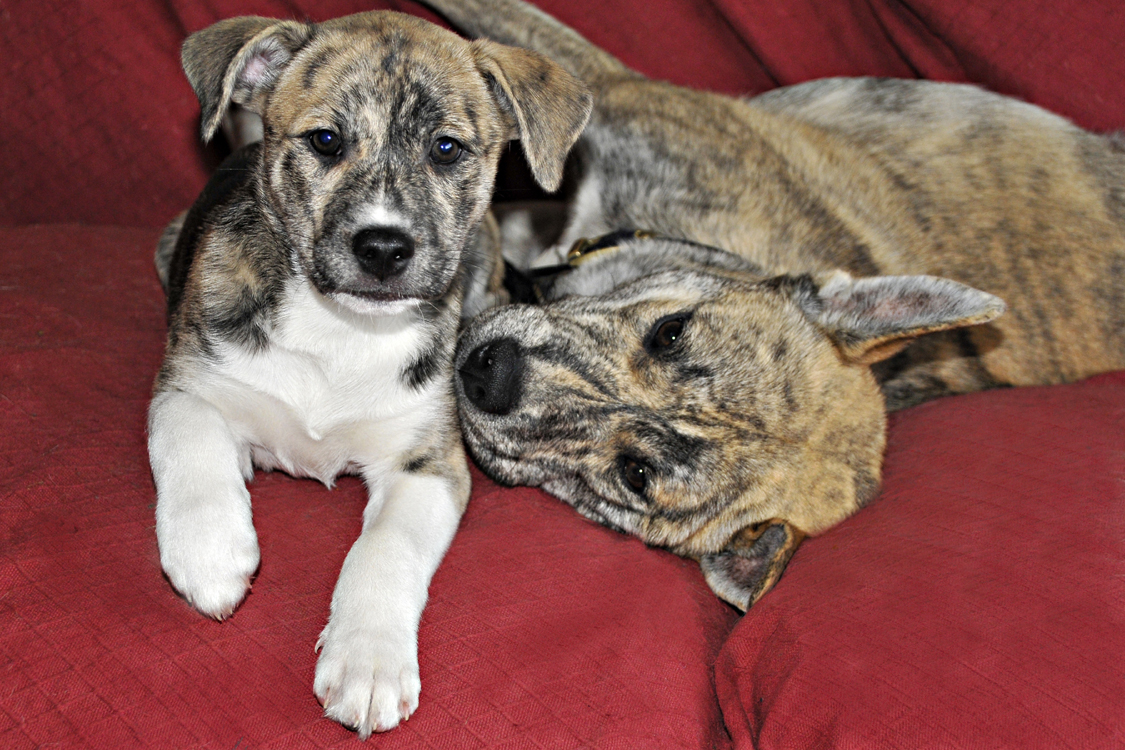
The scales are only part of the picture. A healthy dog should have a recognisable shape: ribs you can feel, a waist, and a tummy that tucks up. Learning to check this at home takes a couple of minutes, and it helps you spot gradual change before it becomes a bigger problem.
The short version
- Look from above and from the side, then feel the ribs. Body shape tells you more than a number on the scales, because breeds and frames differ so much.
- A dog in ideal condition usually has ribs that can be felt without pressing hard, a visible waist behind the ribs and an abdomen that tucks up. [1, 2]
- Count everything that goes into the bowl and everything that is handed over between meals. Treats, chews, dental sticks, food used for training and scraps all count.
- If your dog is overweight, change things gradually and with veterinary guidance. Do not copy a calorie figure from the internet or put your dog on a crash diet. [3, 7]
- Sudden weight change, breathlessness, tiredness or increased drinking need a vet check, not a diet. [3, 7]
Why body condition matters
Obesity means having excess body fat. It is one of the most common nutritional problems seen in pet dogs. A review of the evidence links it with higher risks of several health problems, including orthopaedic disease, diabetes, heart and breathing problems and complications with anaesthesia. That review is a summary of associations, and it does not mean every overweight dog will develop each problem. [3]
Extra weight is also an everyday welfare issue. It can make exercise, getting up, jumping into the car and keeping cool harder work. These are practical reasons to take a steady approach, even when your dog seems cheerful.
How to check your dog at home
You are not trying to diagnose anything. You are building a simple routine you can repeat every few weeks, ideally in the same place and in the same way.
- Feel the ribs. Run your flat fingers along the side of the chest. In an ideal body condition you can feel the ribs under a thin covering of fat without digging. If you have to press hard to find them, your dog may be carrying extra fat. If they stand out sharply, your dog may be too thin.
- Look from above. Stand over your dog while they stand squarely. You should see a waist behind the ribs, where the body narrows before the hips. A straight-sided or bulging outline suggests extra covering.
- Look from the side. The belly should rise up from the ribcage towards the back legs. This is the tummy tuck. A belly that hangs level with the chest, or lower, is worth raising with your vet.
- Check around the tail base and lower back. Noticeable fatty deposits here are a sign of extra weight.
- Do not rely on coat appearance. Fluffy or thick coats hide shape. Feel through the coat, not just look at it.
Take a photo from above and from the side each month. It makes slow change much easier to see.
The nine-point body condition score in plain English
Vets often use a nine-point body condition score, usually shortened to BCS. Body condition scoring has been compared with measured body fat: in a small study of 23 healthy adult client-owned dogs, scores gave a good estimate of body fat compared with a DEXA scan. That supports it as a practical tool, not as a perfect measure for every dog. [2]
In the published WSAVA chart for dogs:
- 1 to 3: under ideal. Bones are easy to see from a distance or are very easy to feel, with little or no fat covering. The waist and tummy tuck are obvious.
- 4 to 5: ideal. Ribs are easy to feel without excess covering. The waist is visible from above and the abdomen is tucked up from the side.
- 6 to 7: over ideal. The waist is losing definition. By 7, ribs can be felt only with difficulty, with fat over the lower back and the base of the tail.
- 8 to 9: well over ideal. Ribs are very hard or impossible to feel. There is no waist or tuck and the abdomen may look distended. [1]
The scale originates from work by Laflamme (1997, Canine Practice), cited in the WSAVA chart. The score is a judgement, so ask your vet or vet nurse to show you what each score feels like on your own dog, rather than relying on a label from a chart. Some breeds have a deep or narrow chest, and some dogs carry loose skin, so their shape may not match a textbook picture exactly. Muscle also matters: a dog can lose muscle while carrying fat, so the scales can look steady while the body changes. Guidelines recommend a body condition score and a muscle condition score as part of a routine nutritional assessment. [7]
Count what goes in: food and treat accounting
Weight gain is usually slow, so the cause is rarely one big meal. It is more often a pattern of small extras.
- Measure meals. Use a measuring scoop or kitchen scales, not an eyeballed scoop. Scoops vary a lot.
- Write down the extras for a week. Include training rewards, chews, dental sticks, chopped-up leftovers, food given by neighbours, and anything licked from plates. Ask everyone in the household to add to the same list.
- Treat as part of the daily food, not on top of it. Use a portion of the day’s food as rewards, or ask your vet how much room there is for treats.
- Choose a few low-effort swaps. Smaller treats, or a lick mat with part of the meal, can keep the routine pleasant.
- Do not cut food by guesswork. Dogs are individuals. Age, neutering, activity, health conditions and the specific food all affect needs. This guide does not give a calorie figure because no single number suits every dog.
Neutered, middle-aged dogs and some breeds are more likely to be recorded as overweight, so these are good times to be extra watchful. [4]
A gradual, vet-led plan
If your dog is overweight, or you are not sure, book a weight and body condition check. This is a normal, non-judgemental appointment. Your vet will want to rule out medical reasons for weight gain and check whether weight loss is safe for your dog.
A good plan is usually:
- Set a clear starting point. Record the weight, body condition score and photos.
- Agree a target and a feeding amount with your vet. They will calculate it for your dog and may suggest a specific weight-management diet. Guidelines emphasise individualised nutritional recommendations designed for the dog in front of the vet. [7]
- Aim for steady, gradual loss. Crash diets are not something to try at home. Your vet will advise on a sensible pace for your dog. This guide deliberately does not give a weekly target.
- Recheck regularly. Weigh and re-score every few weeks and adjust with your vet team’s input.
- Increase activity gradually. Diet is the main lever, with exercise and behaviour changes helping alongside. Start gently, especially if your dog has stiff joints or has not exercised much. [3]
- Plan for maintenance. Keeping weight stable afterwards matters as much as losing it.
If the whole household shares the plan, success is more likely. Be kind to yourself: love expressed through food is entirely normal, and the plan simply gives the affection another outlet, such as a game, a walk or a sniffari.
Signs to seek veterinary advice
Contact your vet promptly if you notice:
- Sudden weight gain or loss, or a belly that swells quickly.
- Weight change despite no change in food.
- Breathlessness, laboured breathing, coughing, or tiring much faster on walks.
- Lethargy or a marked change in behaviour.
- Drinking more than usual, or passing more urine.
- Poor appetite, vomiting or diarrhoea alongside weight change.
- Pain, stiffness or reluctance to move.
Weight changes can have medical causes, and these signs do not tell you which one. Do not start a diet to treat them. If your dog is struggling to breathe, has pale or blue gums or collapses, seek emergency veterinary help immediately.
What the evidence can, and cannot, tell us
Three kinds of evidence sit behind this subject, and they answer different questions.
Measuring condition. Body condition scoring has been compared with laboratory measures of body fat in 23 healthy adult dogs. That supports its practical use, but the sample was small. [2]
Frequency in the UK. A study of UK primary-care veterinary records for 22,333 dogs found that 7.1% were recorded as overweight during 2016. The authors suggested that this probably underestimates how many dogs are really overweight, because it relies on what vets recorded. It shows risk patterns, such as higher odds in pugs, beagles, golden retrievers and English springer spaniels, but not the true proportion of UK dogs now. [4]
Weight and lifespan. In a long-running study of 48 Labrador Retrievers, litter-paired dogs fed 25% less than their pair-mates from eight weeks of age had a longer median life span and later onset of signs of chronic disease. This was a controlled feeding experiment in one research colony, with one breed, a specific diet and a specific design. It does not tell owners how much to feed, and it is not advice to restrict puppies. [6] A separate large retrospective study of neutered, middle-aged pet dogs in North America found that overweight dogs in each of 12 breeds had shorter median life spans than dogs in normal condition. This is an association, and it cannot prove that weight loss would add a particular number of years to an individual dog. [5]
Taken together, the evidence supports keeping dogs in lean, healthy body condition, but not promises about extra years. Clinical advice here also draws on professional guidance, not only trials.
General information only, not a substitute for veterinary advice. This guide cannot assess your dog, diagnose a problem or replace an individual feeding and weight-loss plan.
Sources
- World Small Animal Veterinary Association (WSAVA) (2025 version). Body Condition Score: Dogs (chart). Professional guidance chart; the chart cites Laflamme DP (1997), Development and validation of a body condition score system for dogs, Canine Practice 22:10–15 (no DOI).
- Mawby DI, Bartges JW, d’Avignon A, Laflamme DP, Moyers TD, Cottrell T (2004). Comparison of Various Methods for Estimating Body Fat in Dogs. Journal of the American Animal Hospital Association 40(2):109–114. doi:10.5326/0400109.
- German AJ (2006). The Growing Problem of Obesity in Dogs and Cats. The Journal of Nutrition 136(7):1940S–1946S. doi:10.1093/jn/136.7.1940S. Review.
- Pegram C, Raffan E, White E, Ashworth AH, Brodbelt DC, Church DB, O’Neill DG (2021). Frequency, breed predisposition and demographic risk factors for overweight status in dogs in the UK. Journal of Small Animal Practice 62(7):521–530. doi:10.1111/jsap.13325. Retrospective records study.
- Salt C, Morris PJ, Wilson D, Lund EM, German AJ (2019). Association between life span and body condition in neutered client-owned dogs. Journal of Veterinary Internal Medicine 33(1):89–99. doi:10.1111/jvim.15367. Retrospective observational study.
- Kealy RD, Lawler DF, Ballam JM, Mantz SL, Biery DN, Greeley EH, Lust G, Segre M, Smith GK, Stowe HD (2002). Effects of diet restriction on life span and age-related changes in dogs. Journal of the American Veterinary Medical Association 220(9):1315–1320. doi:10.2460/javma.2002.220.1315. Controlled feeding study in Labrador Retrievers.
- Cline MG, Burns KM, Coe JB, Downing R, Durzi T, Murphy M, Parker V (2021). 2021 AAHA Nutrition and Weight Management Guidelines for Dogs and Cats. Journal of the American Animal Hospital Association 57(4):153–178. doi:10.5326/JAAHA-MS-7232. Professional guidelines, not a primary trial.
Evidence checked 9 November 2026. These sources inform the content; their authors have not reviewed or endorsed this article.